Toxic plants for horses: what never to let them eat
Some plants kill a horse within hours; some feeds that look wholesome make it ill because they are mouldy or soiled. Left to itself, a horse avoids most toxic plants, which are often bitter. It gets caught out when it is hungry, when the plant is dried and mixed into the hay, or when someone throws it hedge clippings. Recognising them is part of a rider’s job.
The toxic plants to know
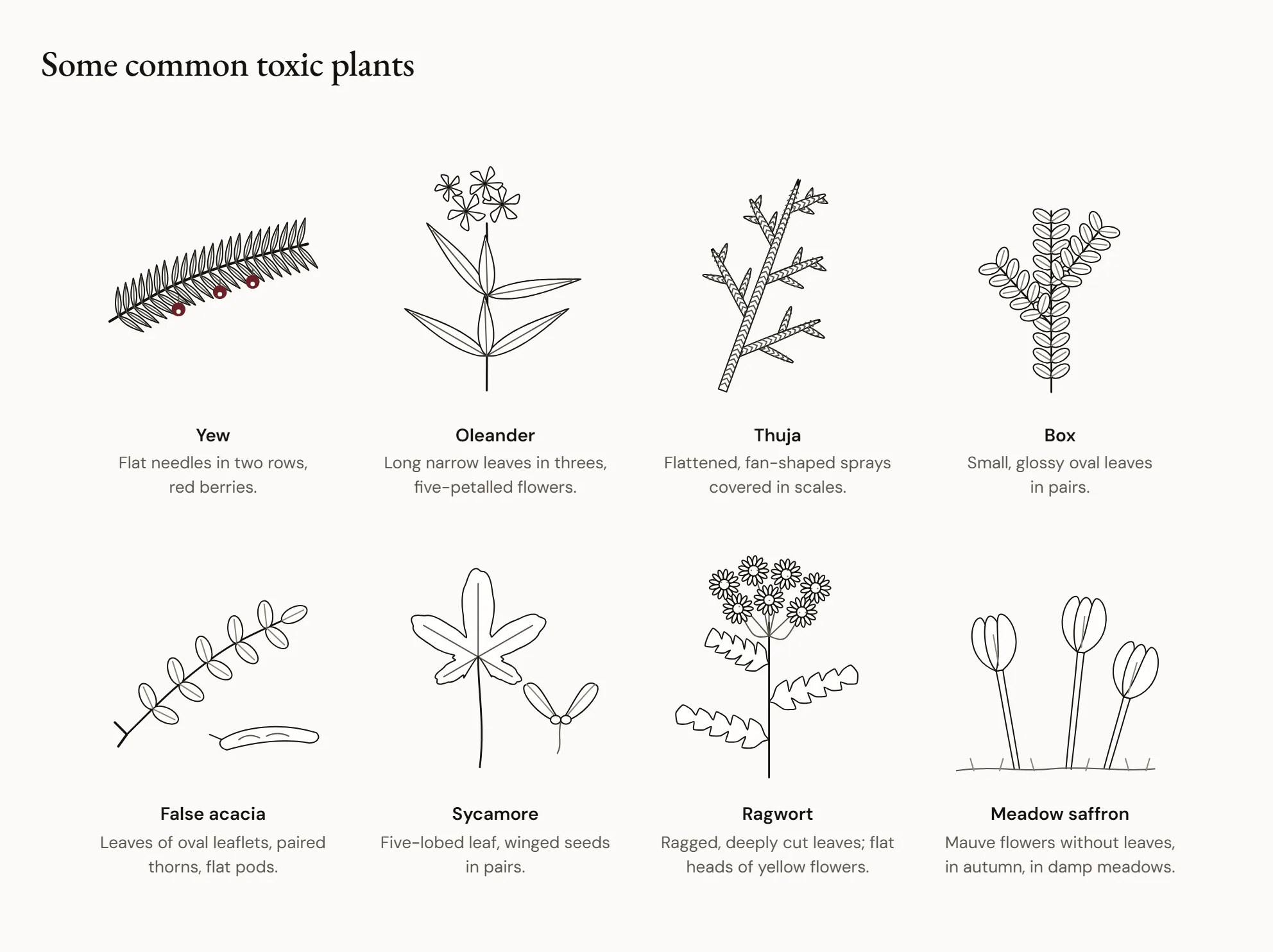
| Plant | Where it grows | Why it is dangerous |
|---|---|---|
| Yew | Hedges, parks, churchyards | Deadly in tiny amounts, often within hours, by stopping the heart |
| Oleander | Gardens, roadsides, especially in the south | Toxic to the heart, fresh or dried |
| Thuja, box, cherry laurel | Garden hedges | Dangerous above all when clippings are fed |
| False acacia (robinia) | Tracksides, woodland edges, hedges | Bark, seeds and leaves are toxic: serious digestive trouble |
| Sycamore | Trees along field boundaries | Its winged seeds, in autumn, and its seedlings, in spring, cause atypical myopathy, often fatal |
| Ragwort | Overgrazed fields, roadsides | Slowly destroys the liver; stays toxic when dried in hay |
| Autumn crocus | Damp meadows, mauve flowers in autumn | Highly toxic, in hay too |
| Bracken, horsetail | Woodland edges, damp fields | Toxic above all when mixed into hay and eaten over weeks |
Common mistake
Giving the horses the hedge clippings “because it’s green”. Thuja, yew, box and laurels are precisely the most toxic hedge plants.
Sycamore and atypical myopathy
The most insidious case is the sycamore, an ordinary tree along field boundaries. Its winged seeds, fallen in autumn, and its seedlings, in spring, contain a toxin that destroys muscle: this is atypical myopathy, an often fatal disease that strikes mostly horses at grass, in wet, windy weather. A stiff horse that trembles, sweats and passes dark urine is a veterinary emergency.
- Spot the sycamores around the fields and fence off the area where the seeds fall.
- In autumn and spring, put hay out in the field so the horses do not look for food under the trees.
- Collect the seeds and pull up the seedlings when you can.
Feed contaminants
A feed can become dangerous without being so to begin with: it has been contaminated. These are called feed contaminants.
- Mould: hay or grain that smells musty, feels warm, gives off a white dust. Fungi produce toxins and spores in it that attack the gut and the lungs.
- Dust and soil: very dusty hay irritates the airways; feeding straight off sandy ground makes the horse swallow sand.
- Dead small animals: a rodent or bird caught up in a bale of hay or haylage can pass on botulism, which is often fatal.
- Feed for other species: some poultry or rabbit feeds contain additives that are deadly to horses.
- Chemicals: rat poison, fertiliser, weedkiller, old lead paint, treated timber that the horse licks or chews.
Good ideas that are not
Grass clippings
Piled up, they ferment within hours and cause serious colic.
Fresh bread and leftovers
Soft bread and leftovers form a ball that can block the gullet.
Too much
Too many treats or too much grain, and any sudden change of diet: the gut bacteria do not have time to adapt.
Safety
If you see a horse eating a plant you do not know, or you find yew or laurel branches in a field, take it out and tell someone in charge at once, even if it looks fine. The signs of poisoning may only show several hours later.
Remember
The rule is simple: the horse eats only what you know is safe. In doubt, leave it out and ask.
Frequently asked questions
- What is the most dangerous plant for a horse?
- Yew: deadly in tiny amounts, often within hours, by stopping the heart. It grows in hedges, parks and churchyards.
- Are sycamore trees poisonous to horses?
- Yes: the winged seeds in autumn and the seedlings in spring cause atypical myopathy, a muscle disease that is often fatal.
- Can horses eat grass clippings?
- No. Piled up, grass clippings ferment within hours and cause serious colic.
- Is ragwort still toxic in hay?
- Yes. Dried and mixed into hay, ragwort keeps its toxicity and slowly destroys the liver of a horse that eats it over weeks.
- What should I do if my horse has eaten a toxic plant?
- Take it away from the area and tell someone in charge and the vet immediately, even if it seems fine: the signs may only appear several hours later.